Finding a Specific eBook Translation
Les Misérables has been translated many times over the century and a half since Victor Hugo completed it, and each translation has a different tone and experience. The early translations tend to stick closer to Hugo’s text, but they’re also translated into 19th-century English with its own literary style. Newer translations take different approaches. I’ve read the Denny and Donougher translations myself, and spot-checked passages in a few of the others. If you’re trying to decide which one to read, check out Marva Barnett’s recommendations and these discussions at GoodReads and Quora.
Unfortunately, figuring out which translation you’re getting when buying an eBook can be tricky. Stores don’t always include the translator on the listing. They’ll mix reviews from different translations. Sometimes they’ll link a print copy of one translation to an ebook of another one. Plus since the original novel and early translations are in the public domain, the market is flooded with a lot of editions using the Wilbour and Hapgood translations. (Now with even more copies featuring “AI”-generated covers.)
And then you have to figure out whether the copy you’re getting is abridged or unabridged!
Nineteenth Century
The original French and early translations into English are now in the public domain, and you can find several of them on Project Gutenberg in multiple formats (Mobi, EPUB, HTML, etc) suitable for reading on a computer, phone, tablet, or various e-readers.
Victor Hugo’s Original French (1862)
The original is available on Project Gutenberg in five parts: Tome 1, Tome 2, Tome 3, Tome 4, Tome 5.
Charles Wilbour (1862)
 Wilbour’s translation is not available on Project Gutenberg, but a lot of modern publishers use it for their text. The Modern Library edition, featuring a portrait of the author on the cover, seems to be consistent across stores: Kobo, Kindle, Google Play, Apple Books, eBooks.com. Bookshop.org.
Lascelles Wraxall (1862)
Wraxall’s translation is on Project Gutenberg, available in five parts: Part 1, Part 2, Part 3, Part 4, Part 5.
Isabel F. Hapgood (1887)
Hapgood’s translation is another one used by a lot of modern publishers who want to use a public domain text. Hers is available in one volume on Project Gutenberg and on Standard eBooks. You can buy copies of this translation, but I’d stick with one of these, since you know they put in effort to avoid typos, cut-and-paste losses, etc. (Project Gutenberg is well-established, and Standard eBooks has, well, high standards for their eBooks.)
Modern Translations
The late 20th and early 21st century translations are still in copyright, so it’s sometimes easier to search by publisher than by translator. I’ve looked up direct links at some of the major ebook stores.
Norman Denny (1976?, Penguin Classics)
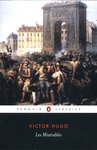 Denny attempts to streamline things for readability. I’ve read this one twice, including the first round of detailed commentary on this site. I’ve seen at least three covers: this one, featuring a painting of a Paris battle scene; the painting of an old man (presumably Valjean) sitting at a table, as seen on my battered copy of the Brick; and a tie-in to the 2012 movie. The latter was also released digitally. Unfortunately it’s out of print and withdrawn from electronic circulation, as Penguin has replaced it entirely with Christine Donougher’s 2013 translation (see below). You can still find older print copies of this translation by searching for ISBN 0140444300, such as this paperback at Amazon or this one at Better World Books.
Lee Fahnestock and Norman Macafee (1987, Signet Classics)
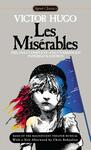 Fahnestock and Macafee aim for an updated text (reportedly based on Wilbour’s) that still preserves Hugo’s style. All copies I’ve seen, both in print and digitally, use the stage musical tie-in cover, making it easy to spot. Kobo, Kindle, Nook, Google Play, Apple Books, eBooks.com, Bookshop.org.
Julie Rose (2008, Modern Library Classics)
 Rose makes an effort to really modernize the language. Some readers have said that it’s more readable, but off-putting. The candlestick drawing seems to be consistent across places I’ve found this one. Kobo, Kindle, Nook, Google Play, Apple Books, eBooks.com, Bookshop.org.
Christine Donougher (2013, Penguin Classics)
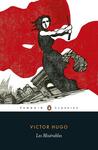 Donougher modernizes and streamlines the language while still preserving Hugo’s style and wit. I read this one for the second round of commentary and liked it better than the Denny translation. (The first edition translated the title as The Wretched, but it’s been changed back, probably so readers can find it more easily.) The digital editions still available use this drawing of a figure waving a red flag, and where I’ve found it in print it’s used the blue-line stylized drawing on what I’ve called the Cinder Block. Kobo, Kindle, Google Play, Apple Books, eBooks.com